An ultra-prime opportunity assessment of Monaco's reclaimed eco-district — status, pricing, risk and comparables.
DistrictL'Anse du Portier · Larvotto
DeveloperSAM L'Anse du Portier
StatusDelivered Dec 2024
PreparedJune 2026
At your leisure
The Verdict
A trophy store of value, bought at full price.
Not an "opportunity" in the value sense. Whether Mareterra is right depends entirely on the game you are playing — and three games sit on the table.
If preserving capital
For prestige, security and residency optionality, paying for the hardest asset in the hardest market is defensible — even strong.
If seeking return
Highest €/m² on earth, at a cyclical high, for a ~2.5–3% net yield. No margin of safety. You pay for certainty and scarcity, by the basis point.
Beyond the spreadsheet
If you intend to live there
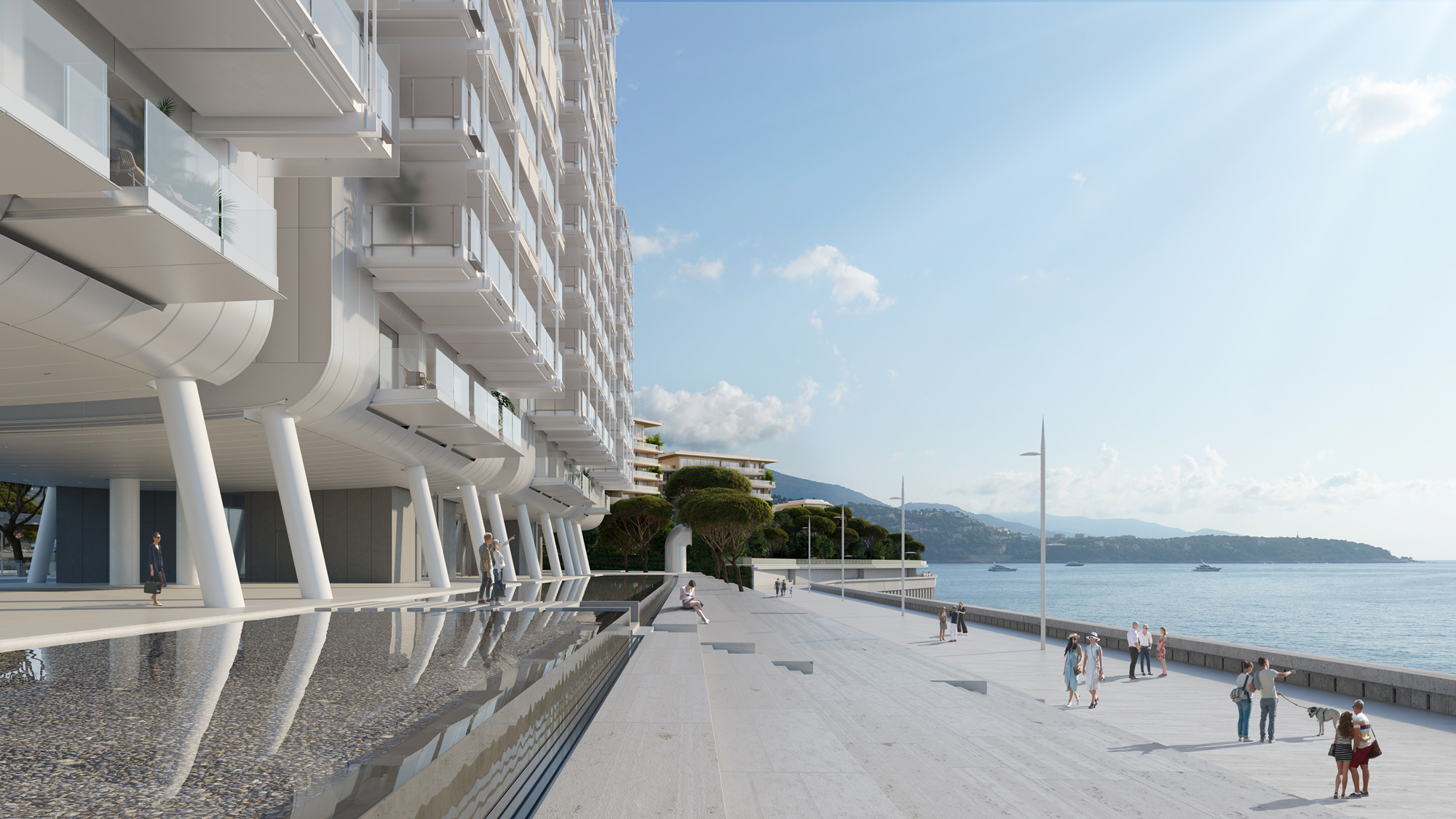
Then yield tables and basis-point arguments quietly become the wrong conversation. You are buying a private address on the 3% of Monaco that didn't exist a decade ago — Piano, Foster, Ando and Boeri, a marina at your door, the Larvotto promenade as your front garden, and a residency that travels with you. Priced in euros, paid in life lived.
On those terms, "expensive" stops being the relevant word. Irreplaceable is.
01 — Current Status
Built, delivered, handed over.Live district
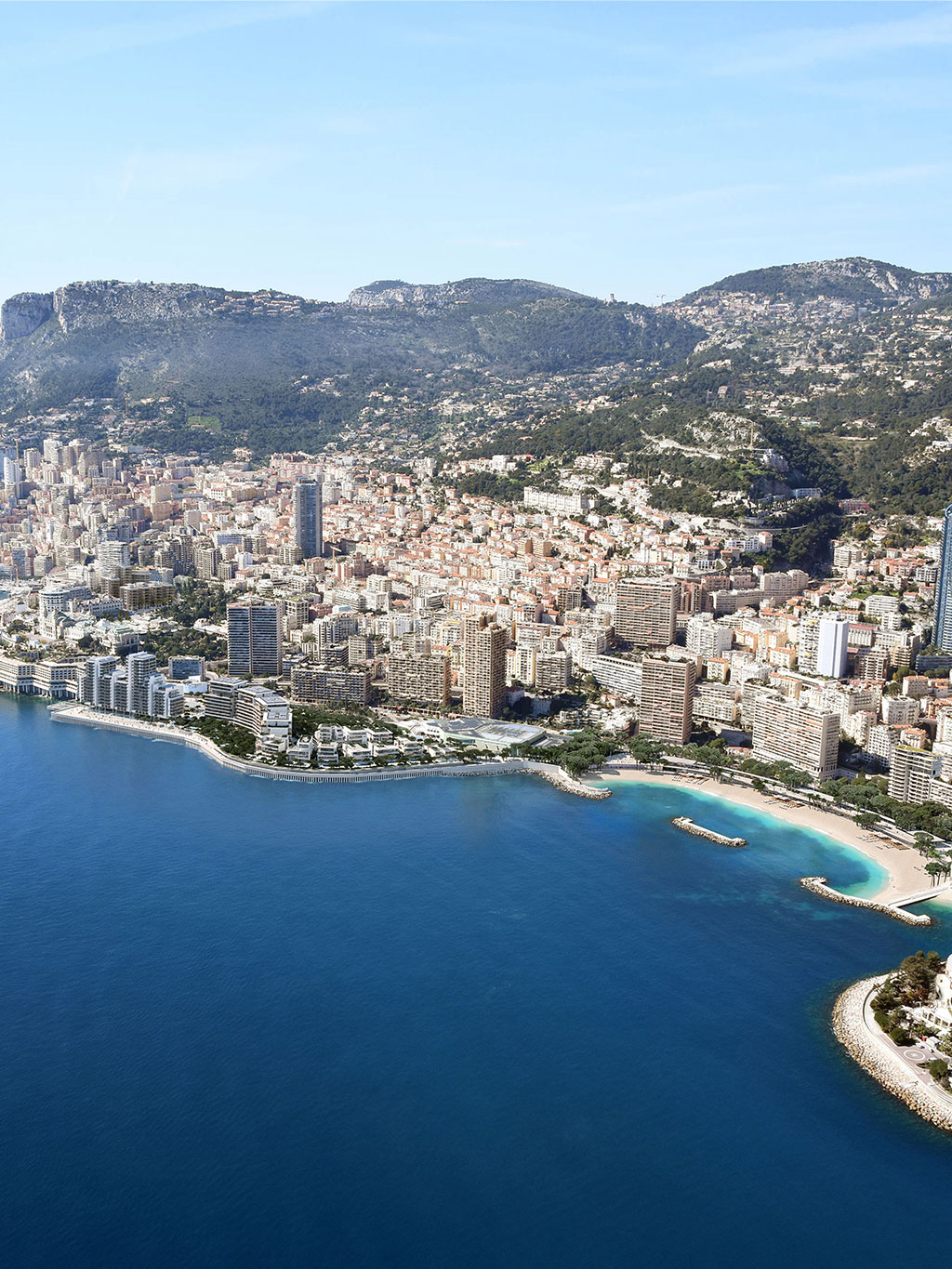
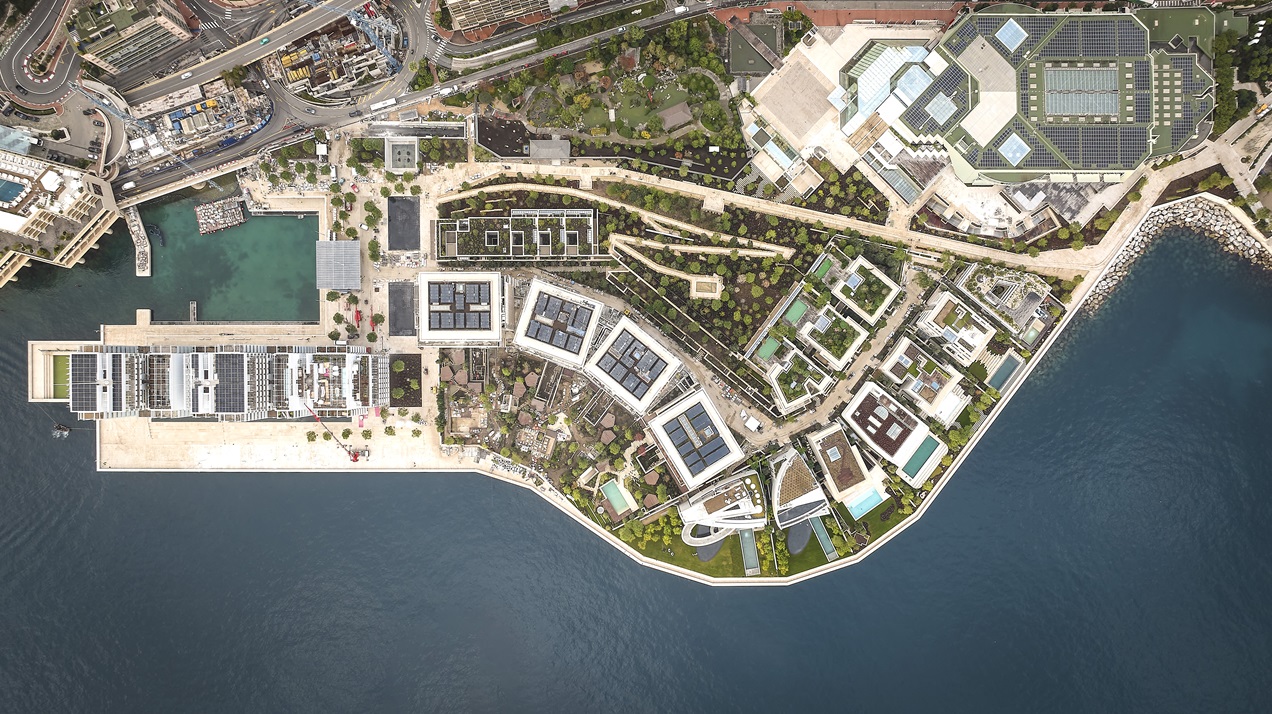
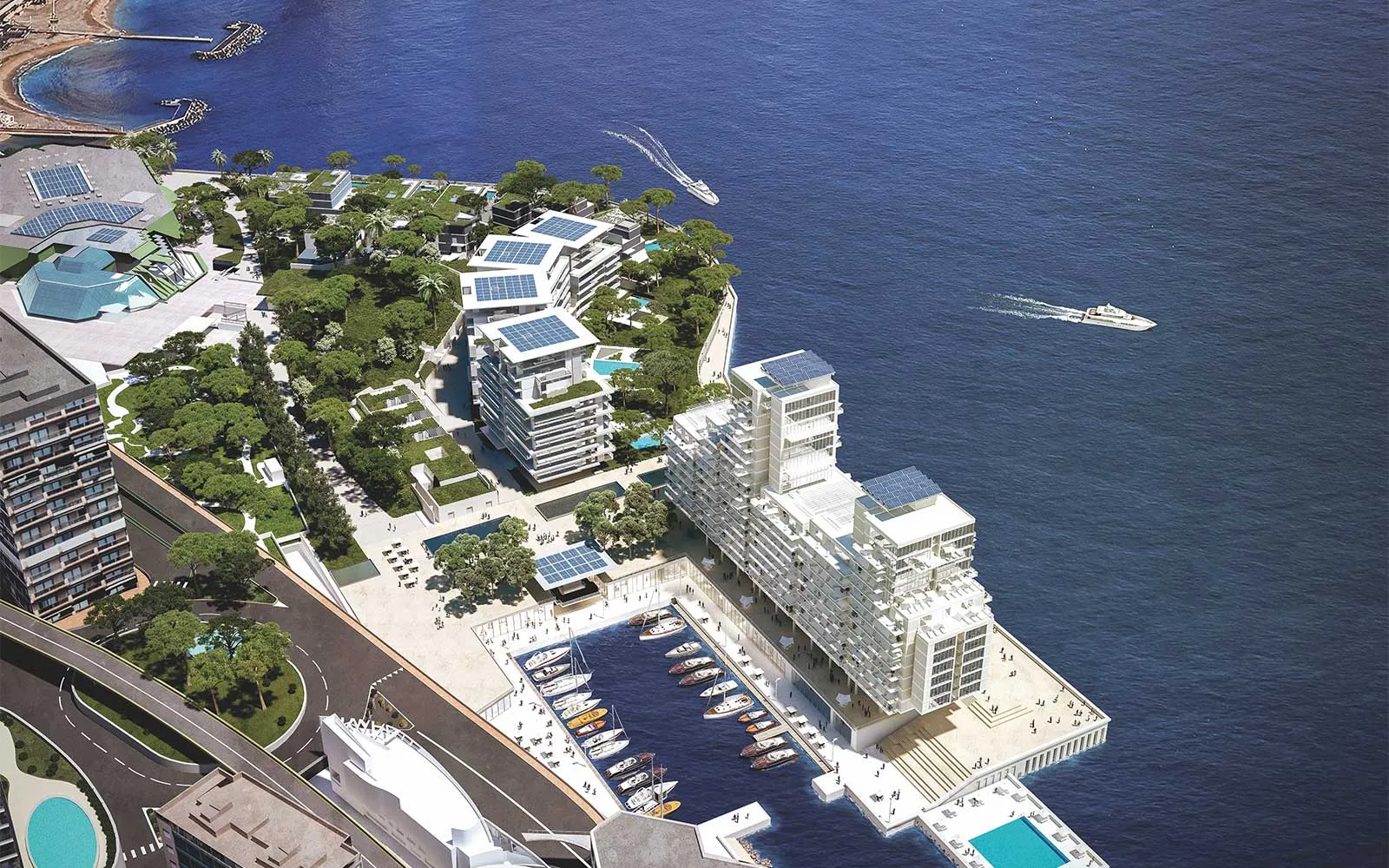
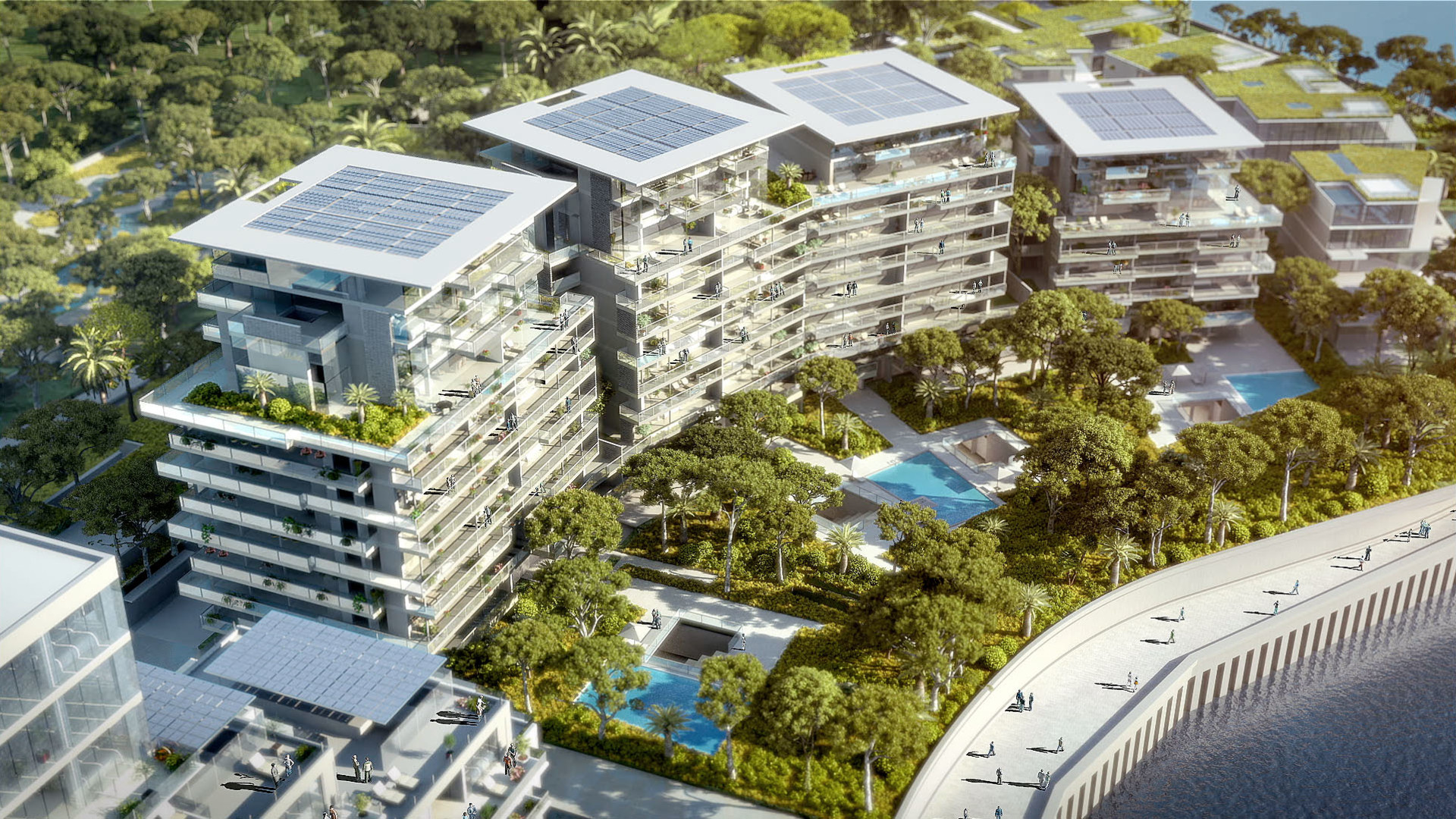
Mareterra is finished, not on plan. Inaugurated by Prince Albert II on 4 December 2024, and described as a functioning district — marina, park, promenade, retail and restaurants in place. The six-hectare strip was structurally complete by December 2019.
6 ha
Reclaimed from the sea (+3% of territory)
~2 Mds €
Total cost, privately funded
120
Residences — 110 apts + 10 villas*
4
Star architects: Piano, Foster, Ando, Boeri
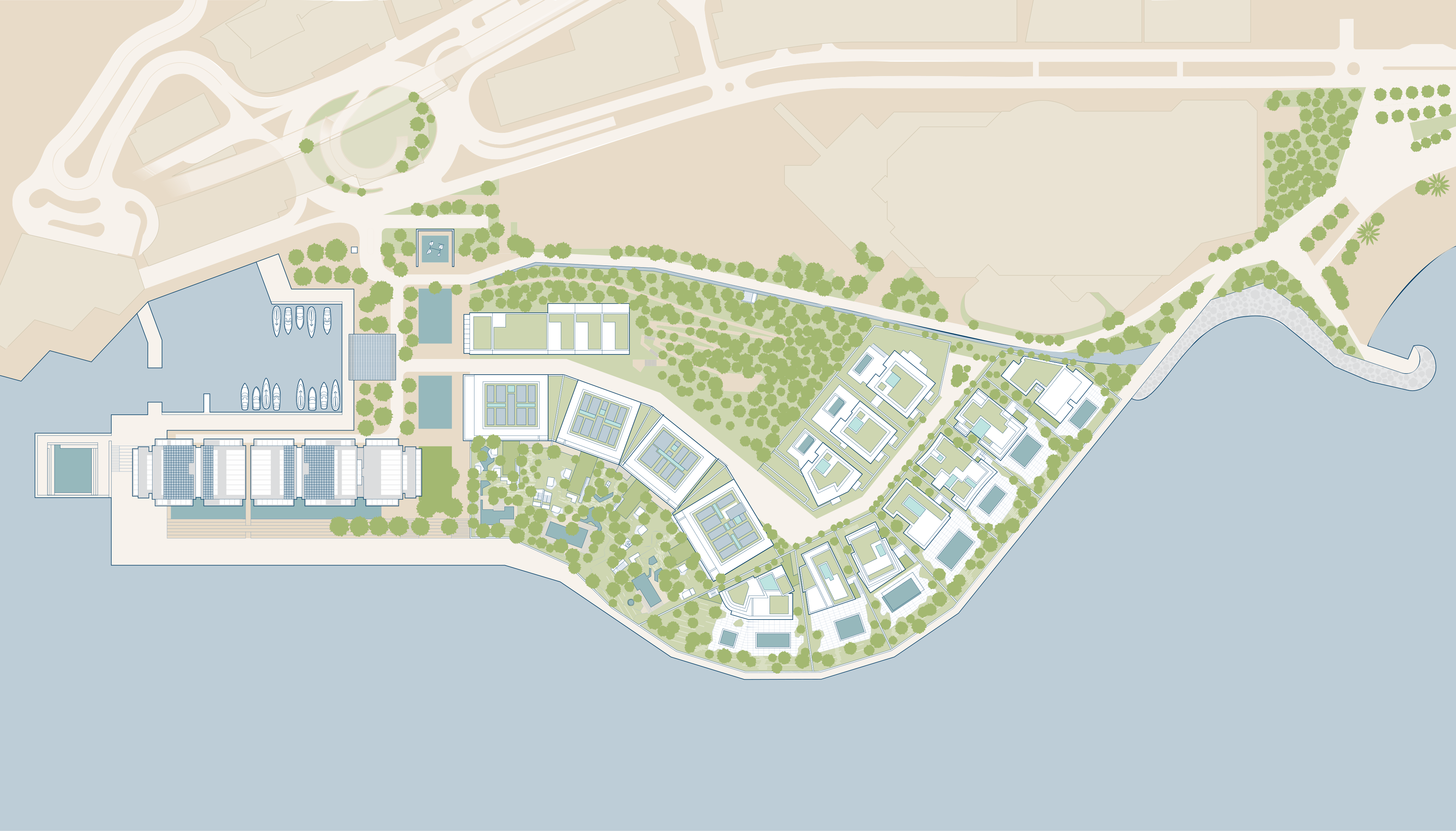
L'Anse du Portier — 6 ha · official masterplan (SAM L'Anse du Portier)
*Commonly cited official figure. Some guides count ~124 total units; Bloomberg references "114 waterfront homes." Treat the exact count as approximate. Masterplan by Valode & Pistre.
02 — Sell-out Status
Primary market gone.Resale / off-market only
16 M €–500 M €Original primary range across the 114 waterfront homes, first listed off-plan in 2017
The developer's sell-down is effectively complete — units were absorbed years before delivery. What trades today is the secondary market, brokered privately.
In 2025, Larvotto logged 13 resales totalling 851,9 M €, attributed by IMSEE to Mareterra units entering the secondary market (Observatory 2025). Off-market, "in strict confidence" is now common listing language — itself a signal that primary stock is exhausted.
03 — Pricing
You pay ~2× the principality.
The "new-district" premium is already fully embedded. Per-m² benchmarks, indicative — ultra-prime pricing is confidential and small-sample.
The trophy: waterfront homes, private marina and Larvotto promenade — what 100k–150k €/m² buys
Monaco resale avg2024
51 967 €
Monaco revised index2025
57 569 €
Larvotto district2025
71 167 €
Mareterra · Le Renzotypical
~100 000 €
Mareterra · primevillas / penthouses
up to 150 000 €
€ per m² · scale to 150 000 € · new-build mean ticket 2024 ≈ 36,4 M € · example live Le Renzo 3-bed resale > 60 M €
04 — Investment Analysis
The case, both ways.
Bull case
Structural scarcity. Only meaningful new land in a generation; reclaimed land is >¼ of the territory.
Track record. ~5% annual growth over 30 years; Knight Frank forecasts ~4% for 2026.
Safe haven. Tax, security and stability underpin durable resilience.
Bear case
You buy the premium. At ~2× average, the narrative is priced in; out-performance needs the premium to keep expanding.
Thin liquidity. <70 new-build deals in 2025; exits need another UHNWI.
Friction. ~6% costs (individual/SCI) to ~9% (other) — though zero income, CGT, wealth & property tax.
The yield
2.5–3%
Realistic net yield (gross ~2.87%). Trophy units yield less and are rarely let. With mortgages at 3–4%, financed carry is negative.
05 — Key Risk
The grey-list overhang.
Monaco's FATF status is the live variable most brochures gloss over. It hasn't broken prices — but it is unresolved, and the resolution date is an asymmetric event.
June 2024
Grey-listed
FATF places Monaco under increased monitoring for AML/CFT enforcement gaps.
June 2025
EU high-risk list + favourable review
Automatically added to the EU high-risk third-country list; FATF notes progress but not clearance.
February 2026 · Now
Still listed
As of the Feb 2026 plenary, Monaco remains on the list. Practical effect: account opening now 10–14 weeks, stricter Source-of-Wealth files.
June 2026
Removal decision expected
The pivotal date — delisting reopens the market to compliance-constrained institutional capital.
The asymmetry
Delisting = tailwind (unlocks institutional & large-fortune buyers barred from grey-listed jurisdictions). Failure = reputational drag. Mareterra itself has surfaced in money-laundering-scrutiny coverage. The one tactical edge is positioning before a confirmed June 2026 exit.
06 — Comparables
Top of the stack, least history.
Mareterra commands a premium over every established peer — for newness and architecture, none of it yet tested through a full resale cycle.
Le Renzo by Renzo Piano — terraced villas, hanging gardens, the architectural premium
Mareterra
Larvotto · 2024
100k–150k €/m². New land, star architects, eco-credentials. The trophy — and the price.
54 flats (250–1,000m²) + 5 villas. Recent ultra-prime stock; generally lower entry than Mareterra's headline.
Direct new-build rival.
Carré d'Or
Monte Carlo
~54 000 €/m² avg, higher for icons. The prestige postcode with the deepest liquidity.
No "new-district" risk.
07 — Bottom Line
A fully-priced, high-quality store of value.
Built, inaugurated, primary-sold-out. The only entry today is resale or off-market, at 100k–150k €/m². For an UHNWI parking capital with indifference to yield, it is a legitimate trophy. As a return-driven play, it is expensive money — sub-3% yield, peak pricing, thin liquidity, grey-list cloud until June 2026.
The one tactical edge
Positioning before a confirmed June 2026 delisting front-runs the institutional reopening — a bet on a regulatory date, not on the bricks.
Where to source resale / off-market
Savills Monaco
Monte-Carlo Sotheby's
Petrini Exclusive
Balkin Real Estate
La Costa Properties
Monaco Properties
SAM L'Anse du Portier · mareterra.com
Sources — IMSEE Real Estate Observatory 2025 (pub. Feb 2026); Bloomberg (Apr 2026); FATF/MONEYVAL plenary statements (Feb 2026); Knight Frank & Savills commentary; Monaco Tribune/Riviera Radio on IMSEE indices; SAM L'Anse du Portier. Figures latest available as of June 2026, indicative only.
Research-based analysis — not personalised investment, legal or tax advice. For a transaction at this scale, engage a Monaco-licensed agent and a tax/structuring adviser.